Plano’s residential zoning rules shape everything from what you can build to whether you can run a business from home. Understanding the basics before making decisions can save buyers and homeowners significant time and money.
What “Zoning” Means in Plano
Zoning is the set of city rules that control how land can be used, residential, commercial, mixed-use, and more, and how buildings sit on a lot.
In Plano, the Zoning Ordinance regulates building size, setbacks from property lines, parking, and landscaping in addition to basic land use.
For official definitions and complete regulations, Plano publishes its Zoning Ordinance online: Zoning Ordinance – City of Plano (Planning Department).
Key Residential Zoning Districts in Plano
Plano has multiple residential zoning districts covering different housing types and densities, from single-family detached homes to townhomes and multifamily buildings.
Each district has its own list of allowed uses, development standards, and sometimes special design requirements that extend beyond basic “residential only” designations.
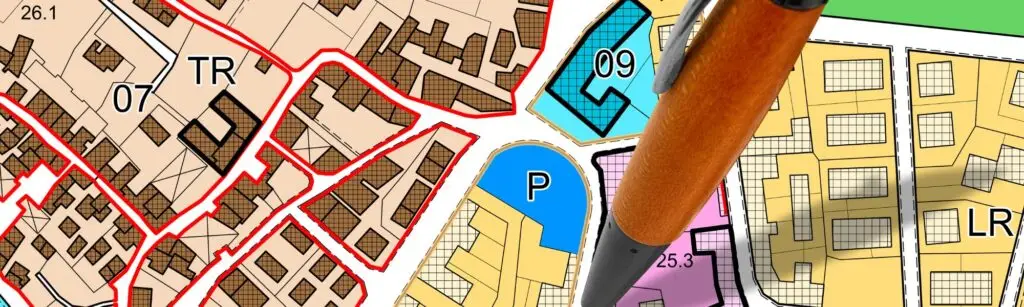
Common residential categories on Plano zoning maps include:
- Single-family districts – Often labeled SF, with variations for minimum lot sizes and attached versus detached housing
- Two-family and townhome districts – Allow duplexes or attached homes on smaller lots
- Multifamily districts – Permit apartments and higher-density residential buildings, usually with stricter parking and design standards
- Planned development (PD) districts – Customize residential rules for specific subdivisions or mixed-use projects
The city provides a summary of all zoning districts and their typical uses here: Zoning Districts and Uses – Plano.
How to Look Up Zoning for a Plano Address
Before making an offer or planning a remodel, look up the property’s official zoning and any nearby zoning changes being proposed.
Follow these steps:
1. Use the Interactive Zoning Map
Visit the Interactive Zoning Map on the Plano Comprehensive Plan website. Enter the property address to see the zoning district code (such as single-family or multifamily) and the surrounding zoning.
2. Confirm with the Planning Department
The Planning Department maintains the official zoning map. If anything looks unclear on the web map, call or email Planning to confirm. The department can also provide information on current rezoning cases and future land-use plans.
3. Check the Zoning Ordinance Text
Once you know the district label, review the Zoning Ordinance for detailed rules on lot size, setbacks, building height, and allowed uses.
Essential links to bookmark:
- Zoning Resources hub: https://www.plano.gov/947/Zoning
- Zoning Ordinance: https://www.plano.gov/1277/Zoning-Ordinance
- Zoning Districts and Uses: https://www.plano.gov/982/Zoning-Districts-and-Uses
- Interactive Zoning Map: https://www.planocompplan.org/QuickLinks.aspx
What Residential Zoning Controls
Once you know your zoning district, you can understand what is and isn’t allowed on your lot.
Plano’s residential zoning rules cover:
Allowed Uses
Determines whether a property can be used for single-family, townhome, duplex, or apartment living, and whether accessory or home-based uses are permitted. Some residential districts explicitly exclude multifamily use, especially in designated residential community design areas.
Building Size and Height
Maximum building height in residential districts is typically limited to a specific number of stories or feet. For example, some single-family attached projects cap height at approximately two stories or 25–35 feet. Planned developments and special zoning cases may impose additional height limits to minimize impact on neighboring homes.
Setbacks and Lot Coverage
Front, side, and rear setbacks ensure minimum distances between buildings and property lines. Detailed standards are specified in the Zoning Ordinance and any applicable PD. Lot coverage limits determine how much of the lot can be occupied by buildings and sometimes paved surfaces.
Parking and Driveways
Residential zoning works alongside the city’s parking regulations to require a minimum number of off-street parking spaces per dwelling unit. In some cases, height and design limits apply to parking structures near residential areas, including screening requirements.
For any specific property, you must review the exact district regulations in the Zoning Ordinance and any adopted zoning case or planned development ordinance attached to that parcel.
Recent Changes Affecting Residential Zoning in Plano
Plano is rewriting its Zoning and Subdivision Ordinances into a Unified Development Code (UDC), which will reorganize and modernize rules, including those for residential development. The UDC will integrate zoning districts, development standards, parking, and subdivision rules into one coordinated code.
Additionally, state laws such as Senate Bill 840 are changing how cities regulate residential density in nonresidential zones, including multifamily and mixed-use housing “by right” in some areas. Plano has adopted zoning amendments in response, adjusting where multifamily is allowed and how it’s treated in certain design districts.
What this means for homeowners and buyers:
- Some nonresidential areas may now allow more residential or mixed-use projects by right, potentially changing future development patterns
- Other districts may see multifamily removed as an allowed use to better align with neighborhood character and the city’s comprehensive plan
Stay updated on the UDC rewrite and zoning amendments:
- Zoning & Subdivision Ordinance Rewrite (UDC): https://www.planocompplan.org/375/Zoning-Subdivision-Ordinance-Rewrite
- Project FAQs: https://www.planocompplan.org/381/HIDDEN-Project-FAQs
Short-Term Rentals, Home Businesses, and Other Special Uses
Plano addresses certain special residential uses—such as short-term rentals and some home-based businesses- through specific sections of the Zoning Ordinance. A 2024 ordinance updated definitions, allowed uses, and use-specific regulations, including a section on short-term rentals and corresponding parking requirements.
Key points to check in the ordinance:
- How “short-term rental” is defined and in which zoning districts it’s allowed or restricted
- Registration, spacing, or operating standards that apply specifically to short-term rentals
- Use-specific regulations in the “Allowed Uses and Use Classifications” article, which outline requirements beyond base district rules
The short-term rental zoning ordinance is available on the city’s document portal: STR Zoning Ordinance 2024-4-13 (PDF).
How to Participate in Zoning Decisions as a Resident
If you’re concerned about how new townhomes, apartments, or mixed-use projects could impact your neighborhood, Plano offers several ways to provide input.
The Planning & Zoning Commission reviews zoning cases in public meetings, and the city provides online tools for residents to view and comment on proposals.
Ways to stay engaged:
- Follow Planning & Zoning agendas and staff reports on the city’s meeting portal
- Use the Zoning Case Response Tool to submit feedback on pending zoning changes in your area
- Monitor “Active Zoning Petitions” in the Interactive Zoning Map section of the Comprehensive Plan site
Key contacts and resources:
- Planning Department / Zoning Resources: https://www.plano.gov/947/Zoning
- Planning & Zoning Commission meetings (agendas and videos): Available through the city meeting portal on Plano.gov
By using the Interactive Zoning Map, Zoning Ordinance, and staying informed on UDC updates, Plano buyers and homeowners can make smarter decisions about where to live, what they can build, and how their neighborhood might evolve over time.